Professional Tree Risk Assessment Services in Seattle, Tacoma, & The Puget Sound Region
As Board Certified Master Arborists working in Western Washington, Tree Risk Assessment is one of the most critical and specialized services we provide. Our region’s combination of tall conifers, broadleaf maples, saturated winter soils, windstorms, and increasingly dry summers creates conditions where understanding tree risk is essential for safety, liability management, and long-term tree preservation.
When we complete a tree risk assessment, we begin with listening and observation, not with equipment. We start by learning how you use your property and what concerns you most: a large Douglas-fir over the house, a leaning maple by the driveway, a decaying alder near a play area, or a row of trees along a neighbor’s fence. We also ask about history—recent construction, soil changes, irrigation, past topping or storm damage—because in Western Washington, many tree problems are delayed reactions to changes made months or years earlier.
From there, we follow a structured process based on industry standards (ISA Tree Risk Assessment Best Management Practices and ANSI A300), combined with our regional experience. Western Washington’s tree species and soils behave in recognizable patterns, and our training allows us to interpret those patterns accurately.
During our assessment, we systematically evaluate:
- Tree health and vigor – overall crown density, leaf/needle color and size, dieback, and growth patterns.
- Species-specific behavior – how Douglas-fir, western redcedar, western hemlock, bigleaf maple, red alder, cottonwood, ornamental cherries, and others typically respond to wind, soil saturation, and decay in our climate.
- Crown and branches – dead or declining limbs, co-dominant stems, included bark, over-extended branches, and old topping or storm damage that may create weak attachments.
- Trunk – cracks, cavities, cankers, seams, fungal fruiting bodies, hollowing, and signs of internal decay or past injuries.
- Root collar and root plate – visible flare (or lack of it), soil mounding or cracking, buried trunks, girdling roots, basal decay, and evidence of root diseases common to our area.
- Site conditions – slope stability, soil type and compaction, drainage, exposure to prevailing winds, proximity to structures, utilities, and areas where people or vehicles are frequently present.
Western Washington’s weather is a major factor. Prolonged winter rains can saturate soils, reducing root anchorage, while wind events from the south or southwest test tall conifers, especially where roots have been cut or compromised by grading, driveways, trenching, or development. We look closely for subtle indications that roots may no longer provide adequate support, even if the tree looks “green and healthy” above ground.
When the situation warrants, we may recommend additional investigative steps to refine our understanding of the risk:
- Root collar excavation using air tools to reveal hidden decay, deep planting, or girdling roots.
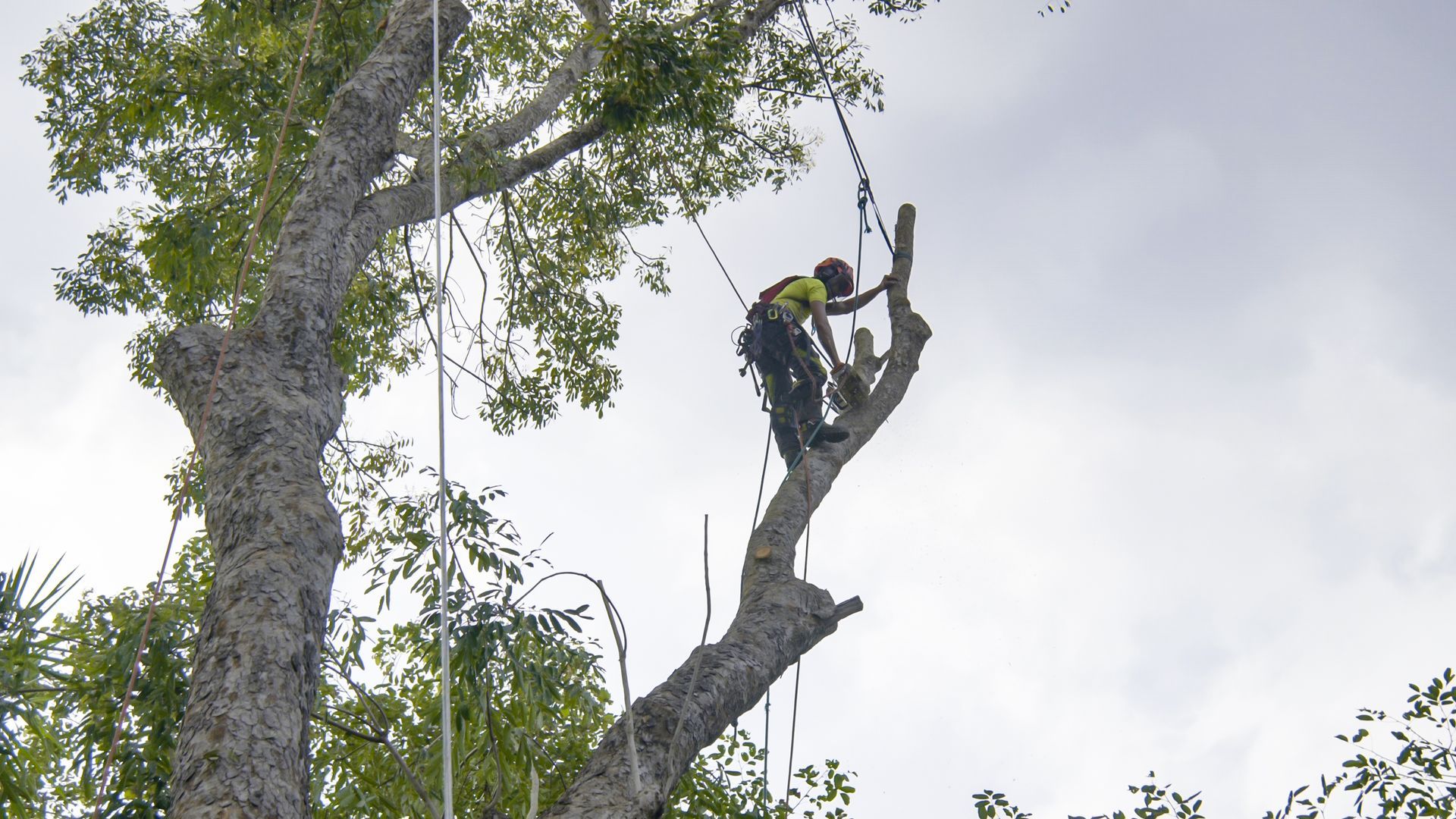
- Closer aerial inspection of the canopy to evaluate defects not visible from the ground.
- Basic decay detection (such as sounding or resistance drilling) in select locations to better understand the extent of internal defects.
We use these tools judiciously, always weighing the benefit of more information against cost, invasiveness, and practicality.
After gathering all relevant information, we analyze three key factors:
- the likelihood of structural failure,
- the likelihood of the tree or part impacting a specified target, and
- the consequences if that impact occurs.
Using this framework, we assign a relative risk level and then translate it into clear, actionable guidance. We explain what we see, what it means, and how urgent it is, in terms you can easily understand.
Our recommendations are tailored to your property, your tolerance for risk, and the value of the tree. Depending on the situation, we may advise:
- Ongoing monitoring on a defined schedule
- Corrective or structural pruning to reduce weight and remove defects
- Soil and root zone improvements to support stability and health
- Installation of supplemental support systems (cabling or bracing) where appropriate
- Adjustments to how the area beneath the tree is used
- Removal when the risk is high and cannot reasonably be reduced to an acceptable level
As Board Certified Master Arborists, we see our role as balancing safety and tree preservation. We understand the importance of shade, habitat, privacy, stormwater interception, and the emotional value of mature trees in Western Washington. Our assessments aim to avoid unnecessary removals while not minimizing real hazards that could injure people or damage property.
For homeowners, HOAs, cities, school districts, and campuses, we often provide written reports that document our findings, risk ratings, and recommendations. These reports can be important for permits, budgeting, insurance, and communication with neighbors or governing bodies.
Ultimately, when we complete tree risk assessments in Western Washington, our goal is straightforward: to help you understand your trees, manage risk in a thoughtful and defensible way, and retain as many safe, healthy trees as possible in a landscape where they are both defining assets and serious responsibilities.
North King County and Snohomish County
John Huddleston
Phone: (253) 736-5286
Email: John@salishseatree.com
ASCA Registered Consulting Arborist #625
Board Certified Master Arborist®
Tree Risk Assessment Qualified
WE - 7660 BM
South King County and Peirce County
Nicholas Johnson
Phone: (206) 819-1294
Email: NicholasJohnson@salishseatree.com
ASCA Registered Consulting Arborist #827
Tree and Plant Appraisal Qualified
Board Certified Master Arborist®
Tree Risk Assessment Qualified
PN - 5662BM





